Ways to Use AI to Increase Your Productivity

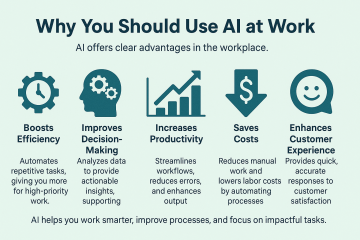
Artificial intelligence is no longer just a futuristic concept—it’s a daily productivity powerhouse. From automating mundane tasks to enhancing creativity and decision-making, AI tools can save you hours every week. But the key isn’t just using AI—it’s using it strategically. Here are practical, actionable ways to leverage AI to work smarter, not harder. 1. Automate Email Management ✅ Smart Sorting & Drafting 💡 Pro tip: Use AI to generate polite, professional responses in seconds—then tweak Read more

How to delete yourself from the internet

How to delete or hide yourself from the internet – 11 effective ways (and most are free)

Take control of your privacy, cut off data trackers, and erase your online presence with these expert-approved tips. Key takeaways Keeping a tight lid on the online data connected to you, your life, and your habits is becoming increasingly important — and difficult. A PC, mobile device, or even a smartwatch with an internet connection allows us to stay connected with friends and family, work, stay entertained, monitor our health and habits, and handle our Read more

What is TTL Value? Definition & FAQs

TTL: What It Is and Why It’s Useful in Networking and Beyond

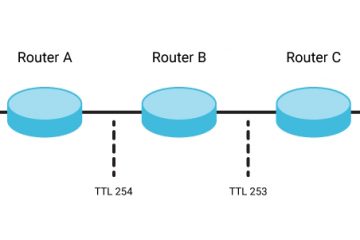
You’ve probably seen “TTL” in network diagnostics, DNS settings, or caching systems—but what does it really mean? And why should you care? TTL (Time to Live) is a fundamental concept in computing that controls how long data is allowed to exist before it’s discarded. Though simple in design, TTL plays a critical role in performance, security, and reliability across the internet. Let’s break down what TTL is, where it’s used, and why it matters—even if Read more

Bandwidth, Throughput, Speed, Latency, and Network Performance

Understanding Network Performance: Bandwidth, Throughput, Speed, Latency, and More

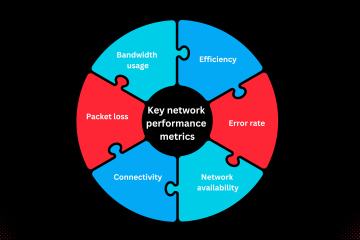
You’ve seen terms like “1 Gbps internet,” “low latency,” or “high jitter”—but what do they really mean? And more importantly, which ones actually matter for your work, gaming, or video calls? In 2026, with remote work, cloud gaming, and 4K streaming, understanding these concepts helps you choose the right internet plan, troubleshoot issues, and optimize your network. Let’s break down each term—clearly, accurately, and with real-world context. 1. Bandwidth vs. Throughput: Capacity vs. Reality Bandwidth Read more

Pyramid Schemes on Social Media

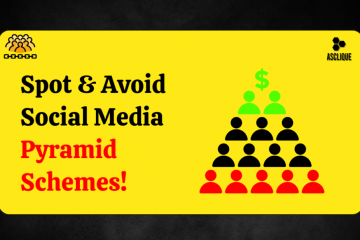
You see a post from a friend—or someone who looks like a friend—promising easy money: “Earn $500 in 24 hours! Just send $100 to get started. I made $2,000 last week!” It sounds too good to be true. And it is. This is a modern pyramid scheme, repackaged for social media—and it’s spreading faster than ever in 2026. The core lie? “Send money first, and you’ll get more back.” But the truth is far darker: Read more

PAM vs. IAM: Understanding the Difference and Why Both Matter for Security in 2026

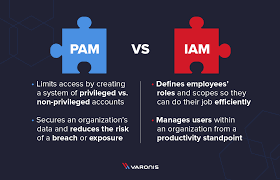
In today’s digital landscape, controlling who has access to what is critical—whether you’re a small business or a global enterprise. Two key frameworks help manage this: IAM (Identity and Access Management) and PAM (Privileged Access Management). While often confused—and sometimes overlapping—they serve distinct purposes. Think of IAM as the front door to your organization, and PAM as the vault inside. Let’s break down what each does, how they differ, and why you need both in Read more

Why Websites Need HSTS

HTTPS vs. HSTS: What’s the Difference and Why Both Matter for Web Security

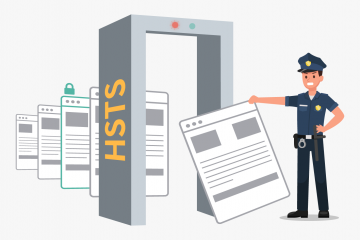
You’ve probably heard that HTTPS is essential for secure browsing. But what about HSTS? If you’ve seen it mentioned in tech articles or browser settings, you might wonder how it relates to HTTPS—and whether you need to worry about it. The short answer: HTTPS encrypts your connection, while HSTS ensures you always use HTTPS—even if you accidentally type “http.” Together, they form a powerful defense against common web attacks. Let’s break down what each does, Read more

IT support levels

What Are the Different IT Support Levels (L1 to L3)? A Clear Guide for Businesses and Users

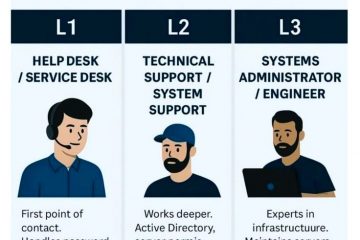
When your computer crashes, your email stops working, or your Wi-Fi drops during a critical call, you don’t just need help—you need the right help. That’s where IT support tiers come in. Most organizations structure their tech support into three levels: Level 1 (L1), Level 2 (L2), and Level 3 (L3). Each tier handles increasingly complex issues, ensuring that simple problems are resolved quickly while deep technical challenges get expert attention. Understanding these levels helps Read more

Understanding the Computer Booting Process: From Power Button to Desktop

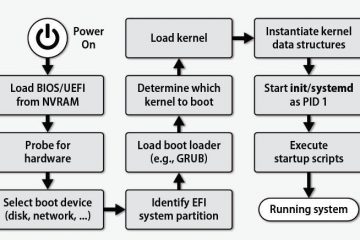
You press the power button, and a few seconds later, your desktop appears. It feels instant—but behind that simplicity is a carefully choreographed sequence of hardware checks, firmware instructions, and software loading. This process, called booting, is essential to every computer’s operation. Understanding how it works helps you troubleshoot startup issues, optimize performance, and appreciate the engineering that makes modern computing possible. Let’s walk through what really happens between “off” and “ready.” Step 1: Power-On Read more

What is phishing - recognize and avoid phishing scams

Phishing and Its Risks: How to Spot and Stop the #1 Cyber Threat in 2026

You get an email from your bank: “Suspicious login detected! Click here to secure your account.”A text pops up: “Your Amazon order failed. Update payment info.”A Teams message arrives: “Hi, can you approve this invoice? Urgent!” These aren’t just annoying spam—they’re phishing attacks, the most common and dangerous cyber threat of our time. In 2026, phishing isn’t just about fake Nigerian princes. It’s sophisticated, targeted, and alarmingly convincing. And it works: 91% of all cyberattacks Read more