For years, we’ve been told the same thing: Use a strong password. Mix uppercase, lowercase, numbers, and symbols. Make it long. Don’t reuse it. Change it regularly.
And for a time, that advice worked. But in 2026, the cybersecurity landscape has shifted dramatically. Even the strongest, most complex password can be bypassed, stolen, or rendered useless—not because you did anything wrong, but because attackers have evolved far beyond simple guessing.
Here’s why relying on passwords alone is no longer safe—and what you need to do instead.
1. Passwords Are Being Stolen at Scale
You don’t have to click a phishing link to lose your password. Hackers are harvesting them en masse through:
- Massive data breaches: In 2025 alone, over 4 billion login credentials were leaked from compromised companies (healthcare providers, retailers, even government agencies). If you’ve reused a password anywhere, it’s likely already in a hacker’s database.
- Credential stuffing: Automated bots test stolen username/password pairs across hundreds of sites. If your Gmail password was leaked in a fitness app breach, attackers will try it on your bank, Amazon, and social media accounts.
- AI-powered cracking: Modern tools use machine learning to guess passwords millions of times faster than before—especially if they’re based on personal info (pet names, birthdays, etc.).
🔑 Reality check: A “strong” password like
Tr0ub4dor&3might look secure—but if it’s been exposed in a breach, it’s as good as “password123.”
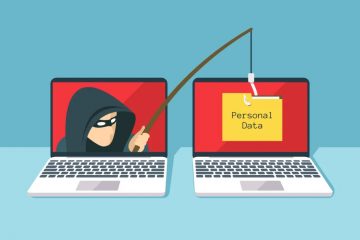
2. Phishing Has Become Scarily Convincing
Today’s phishing attacks don’t come from “Nigerian princes.” They arrive as:
- Fake Microsoft Teams alerts
- “Your package is delayed” texts with malicious links
- Voice calls from “Apple Support” claiming your account is compromised
These scams trick you into voluntarily entering your password on fake login pages that look identical to the real thing. Even tech-savvy users can be fooled.
🎭 Worse: Some attacks use real-time proxying, where your login goes to the real site (so 2FA codes work), but the attacker hijacks your session instantly.
3. Session Hijacking Bypasses Passwords Entirely
Hackers no longer always need your password. With session cookies (small files that keep you logged in), they can:
- Steal your active login from public Wi-Fi
- Use malware to extract cookies from your browser
- Take over your account without ever knowing your password
This is how attackers bypass even the strongest passwords—and why “remember me” features can be risky on shared devices.
4. SIM Swapping Renders SMS-Based 2FA Useless
Many people use text messages for two-factor authentication (2FA). But SIM swapping attacks let hackers convince your carrier to port your number to their device. Once they control your phone number, they receive your 2FA codes—and reset your passwords.
In 2025, high-profile victims lost millions in crypto this way. SMS-based 2FA is now considered insecure by cybersecurity experts.
So What Should You Do? The Modern Defense Strategy
Passwords still matter—but they’re just one layer. Here’s how to stay protected in 2026:
✅ 1. Use a Password Manager
- Generates and stores unique, complex passwords for every site.
- Alerts you if a password appears in a breach.
- Eliminates reuse—the #1 cause of account takeovers.
Recommended: Bitwarden (free), 1Password, or Apple Keychain.
✅ 2. Enable Phishing-Resistant 2FA
Ditch SMS. Use:
- Authenticator apps (Google Authenticator, Authy)
- Hardware security keys (YubiKey, Titan)
- Biometric verification (Face ID, fingerprint)
These methods can’t be intercepted via SIM swap or phishing.
✅ 3. Turn On Multi-Factor Authentication (MFA) Everywhere
Especially for email, banking, cloud storage, and social media. MFA blocks 99.9% of automated attacks, according to Microsoft.
✅ 4. Monitor for Account Takeover Signs
- Unexpected password reset emails
- Logins from unfamiliar locations
- Missing emails or sent messages you didn’t write
Use Google’s Security Checkup or Apple’s Account Security dashboard regularly.
✅ 5. Consider Passkeys (The Future of Login)
Passkeys replace passwords with cryptographic keys tied to your device. They’re:
- Phishing-proof
- No passwords to remember
- Supported by Apple, Google, Microsoft, and major websites
Try them today on sites like PayPal, eBay, or Dropbox.
Final Thought: Security Is a System—Not a Single Step
In the past, a strong password was your castle wall. Today, attackers fly drones over it, tunnel under it, and impersonate you to walk through the gate.
The solution isn’t a stronger wall—it’s layers of defense: unique passwords, phishing-resistant 2FA, vigilant monitoring, and emerging tech like passkeys.
Your digital life is too valuable to protect with just one outdated habit.
It’s time to upgrade your entire security mindset.
Because in 2026, your password is just the beginning—not the end—of your protection.
0 Comments