Artificial intelligence is often hailed as a force for good—powering medical breakthroughs, climate solutions, and smarter assistants. But like any powerful tool, AI is also being weaponized. In 2026, cybercriminals are leveraging AI to launch faster, stealthier, and more convincing attacks than ever before.
This isn’t science fiction. AI-powered hacking is already here—and it’s changing the rules of cybersecurity for everyone.
1. Hyper-Realistic Phishing at Scale
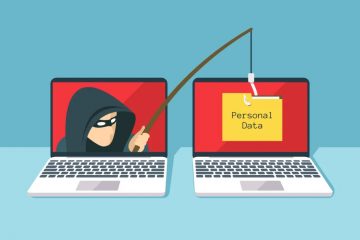
Gone are the days of poorly worded “Nigerian prince” emails. AI now enables personalized, context-aware phishing that’s nearly indistinguishable from legitimate communication.
- How it works: Attackers scrape your social media, public records, and data breaches to craft messages that reference your job, recent purchases, or even family members.
- AI tools can mimic your boss’s writing style, generate fake invoices, or clone a colleague’s voice for vishing (voice phishing) calls.
- Result: Success rates for phishing have jumped by over 300% since 2023, according to cybersecurity firm Proofpoint.
🎯 Example: You receive an email that looks exactly like your company’s HR portal, referencing your recent vacation request. It urges you to “verify your payroll details”—and you click without hesitation.
2. Automated Vulnerability Discovery
Hackers used to manually search for software flaws. Now, AI can scan millions of lines of code in seconds to find zero-day vulnerabilities—before developers do.
- Tools like AI fuzzers automatically generate malformed inputs to crash apps and expose weaknesses.
- Criminal groups use large language models to analyze open-source code repositories for hidden bugs.
- Once found, these vulnerabilities are sold on dark web markets or used in targeted ransomware campaigns.
⚠️ Impact: The time between vulnerability discovery and exploitation has shrunk from weeks to hours.
3. Deepfake Social Engineering
AI-generated deepfake audio and video are becoming shockingly realistic—and increasingly accessible.
- In 2025, a CEO was tricked into authorizing a $25M wire transfer after receiving a real-time deepfake video call from someone impersonating a board member.
- Voice-cloning tools can replicate a loved one’s voice in under 3 seconds of audio—used in “grandparent scams” to demand urgent money.
🎙️ Red flag: If someone calls in distress asking for money, always verify through a second channel (e.g., call their known number).
4. Evading Detection with Adaptive Malware
Traditional antivirus relies on known threat signatures. AI-powered malware learns and adapts to avoid detection:
- It can pause activity when it senses a sandbox or virtual machine (common in security labs).
- It mimics normal user behavior—clicking links, typing slowly—to blend in.
- Some strains even rewrite their own code each time they spread, making them nearly impossible to track.
🔍 Result: AI-driven malware can dwell inside networks for months before striking.
5. Password Cracking on Steroids
AI accelerates brute-force attacks by predicting likely passwords based on:
- Language patterns
- Common substitutions (“@” for “a”)
- Personal data from breaches
Tools like PassGAN (a generative adversarial network) can crack 85% of leaked passwords in hours—far outpacing traditional methods.
What This Means for You
🔒 For Individuals:
- Phishing is now hyper-personalized—never trust an email or call just because it “sounds right.”
- Use multi-factor authentication (MFA) everywhere—especially phishing-resistant methods like security keys or authenticator apps.
- Freeze your credit to prevent identity theft.
- Verify unexpected requests—even from known contacts—via a separate communication channel.
🏢 For Businesses:
- Assume breach: Adopt a “zero trust” model where no device or user is trusted by default.
- Train employees regularly with AI-generated simulated attacks.
- Deploy AI-powered defenses: Use autonomous security platforms that can detect anomalous behavior in real time.
- Enforce strict access controls and least-privilege principles.
The Silver Lining: AI Is Also Defending Us
While attackers use AI, defenders are fighting back:
- Autonomous response systems (like Microsoft Defender for Endpoint) use AI to isolate threats in seconds.
- Behavioral analytics spot unusual logins or data transfers.
- Email security gateways now use AI to detect deepfake voice patterns and spoofed domains.
🛡️ The new arms race: AI vs. AI. And the defenders are gaining ground—but only if we stay vigilant.
Final Thought: Vigilance Is the New Password
In the age of AI-powered attacks, human judgment is your last line of defense. Technology alone won’t save you. What will is skepticism, verification, and layered security.
So next time you get an urgent message—even from someone you know—pause.
Ask: Could this be AI?
Then act accordingly.
Because in 2026, the most dangerous attacks don’t come from strangers.
They come from machines that sound exactly like you.
0 Comments